

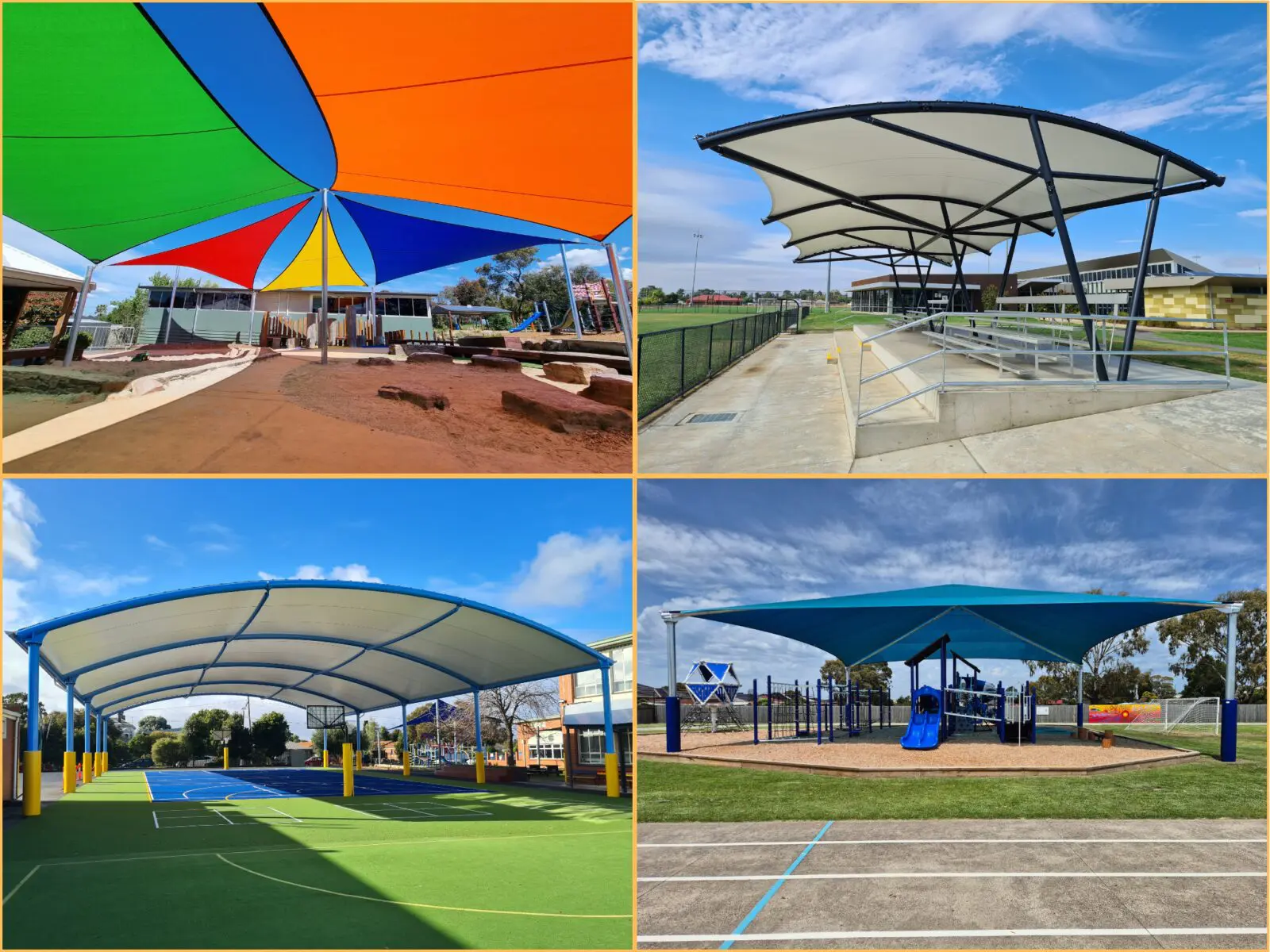
Choosing the right shade structure depends on more than how much shade you need. The structure needs to suit how the space will be used, the size and shape of the site, environmental conditions, the required level of coverage and whether protection from rain is also needed.
Different shade structures solve different problems. A shade sail may be ideal for an irregularly shaped playground, while an umbrella can provide substantial coverage where underground services limit the number of posts. A cantilever can keep a viewing area clear of structural posts, while a larger tension membrane can create a substantial covered space over a sports or recreation area.
Understanding how each shade solution works — and where it is most suited — can help you choose a structure that works with the site rather than trying to make the site work around the structure.
Start with how the space will be used
The intended use of the area should be one of the first considerations when choosing a shade structure.
A small seating area, playground, sports court and large public gathering space can all have very different requirements.
Consider:
- what activities will take place underneath the structure
- how many people will use the area
- whether the space needs shade or waterproof protection
- whether clear, unobstructed space is important
- any existing infrastructure or site constraints
These factors help determine the most appropriate structure, size and fabric for the project.
Shade sails
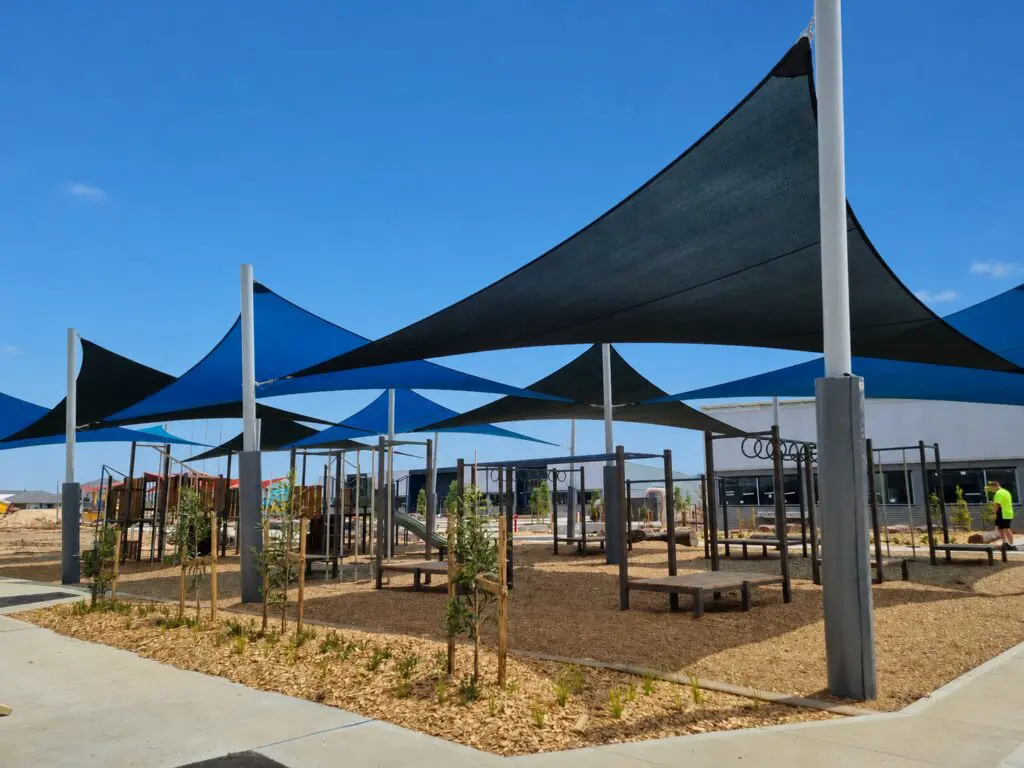
Shade sails are one of the most flexible permanent shade solutions because their shape and configuration can be designed around the site.
Rather than being restricted to a standard rectangular footprint, custom shade sails can use different shapes, heights and fixing points to respond to the available space. Multiple sails can also be combined to provide coverage across larger or more complex areas.
Shade sails are particularly suited to:
- playgrounds
- parks and recreational areas
- outdoor learning spaces
- courtyards and seating areas
- residential outdoor spaces
Their geometry can be adapted around buildings, playground equipment, pathways and other site constraints, making them particularly useful for irregularly shaped spaces or projects requiring a more architectural appearance.
Shade sails can be manufactured using mesh or waterproof fabrics, depending on the level of protection required. Mesh fabrics provide UV protection while allowing airflow and some light through the structure, while waterproof membranes can provide protection from both sun and rain.
Umbrella structures
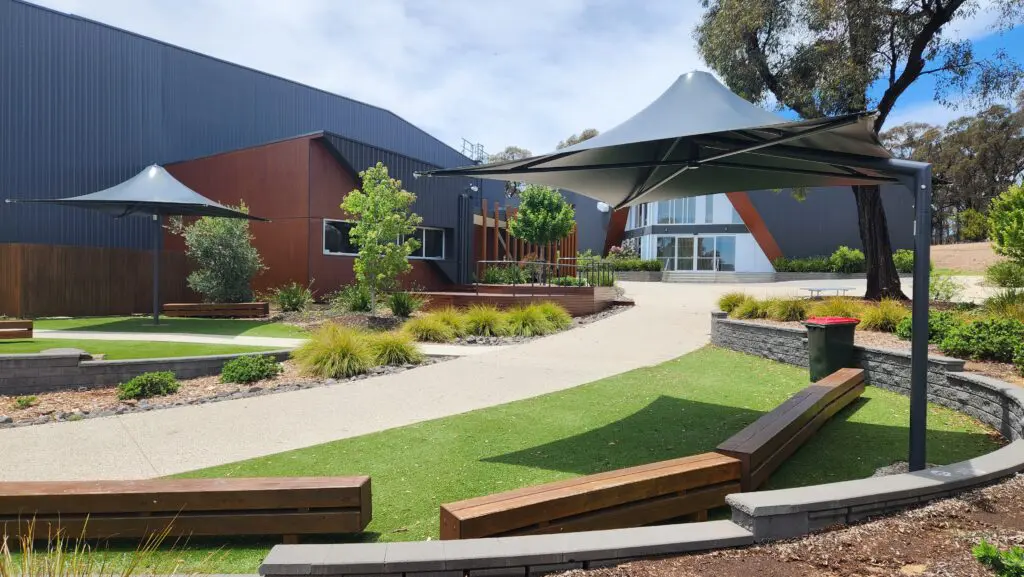
Umbrella structures can provide substantial coverage while requiring relatively few ground supports, making them particularly useful where the location of posts is restricted.
They are commonly used for:
- outdoor dining
- seating areas
- schools
- parks
- recreational spaces
- courtyards and community areas
Umbrellas can be designed with centre posts or cantilevered configurations, depending on the requirements of the site. Multiple umbrellas can also be positioned or linked together to provide coverage across a larger area.
This can be particularly useful where underground services, existing infrastructure or other site constraints limit where foundations can be installed, or where multiple smaller areas need to be covered without installing one large structure.
Umbrellas can use waterproof fabric where protection from both sun and rain is required, or mesh fabric when UV protection and airflow are the priority.
Hip & Ridge structures
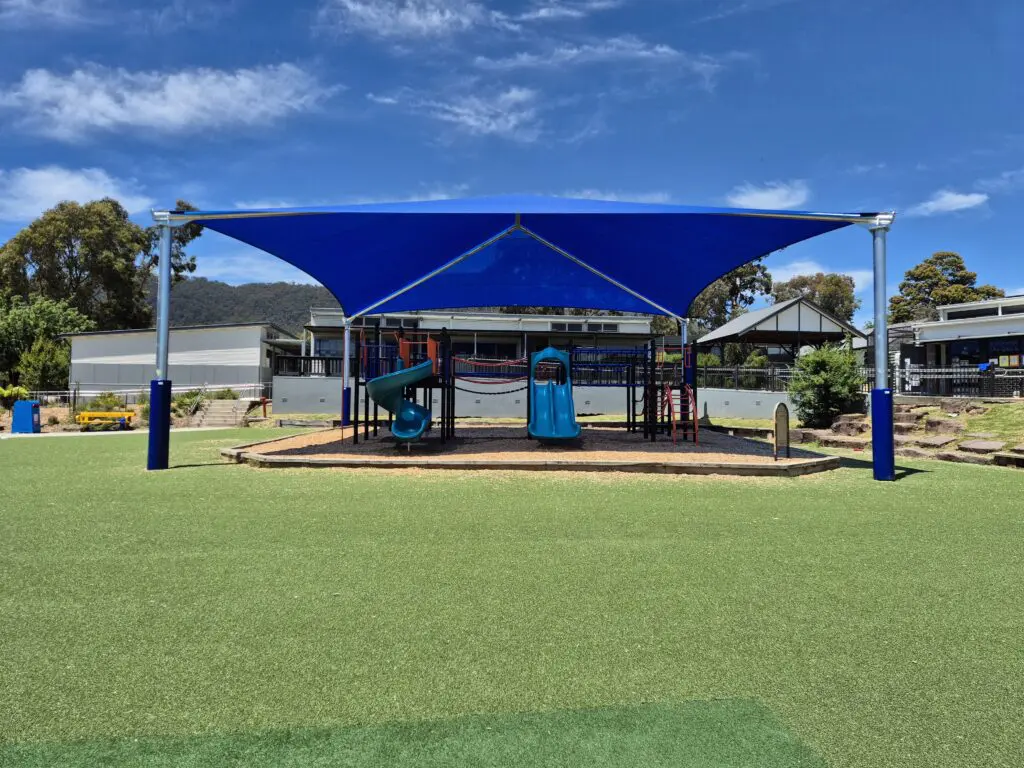
Hip & Ridge structures are suited to larger areas where substantial coverage is required while maintaining a generous open space underneath.
Their raised ridge creates additional height through the centre of the structure, allowing the structure to span a larger area while retaining an open feel underneath.
They are commonly used for:
- playgrounds
- outdoor learning areas
- assembly spaces
- recreational areas
- larger community spaces
- parks
Hip & Ridge structures can be manufactured using mesh or waterproof fabric, depending on whether the priority is UV protection and airflow or protection from sun and rain. Their raised, open design makes them particularly suited to larger playgrounds, gathering areas and recreational spaces.
Cantilever structures
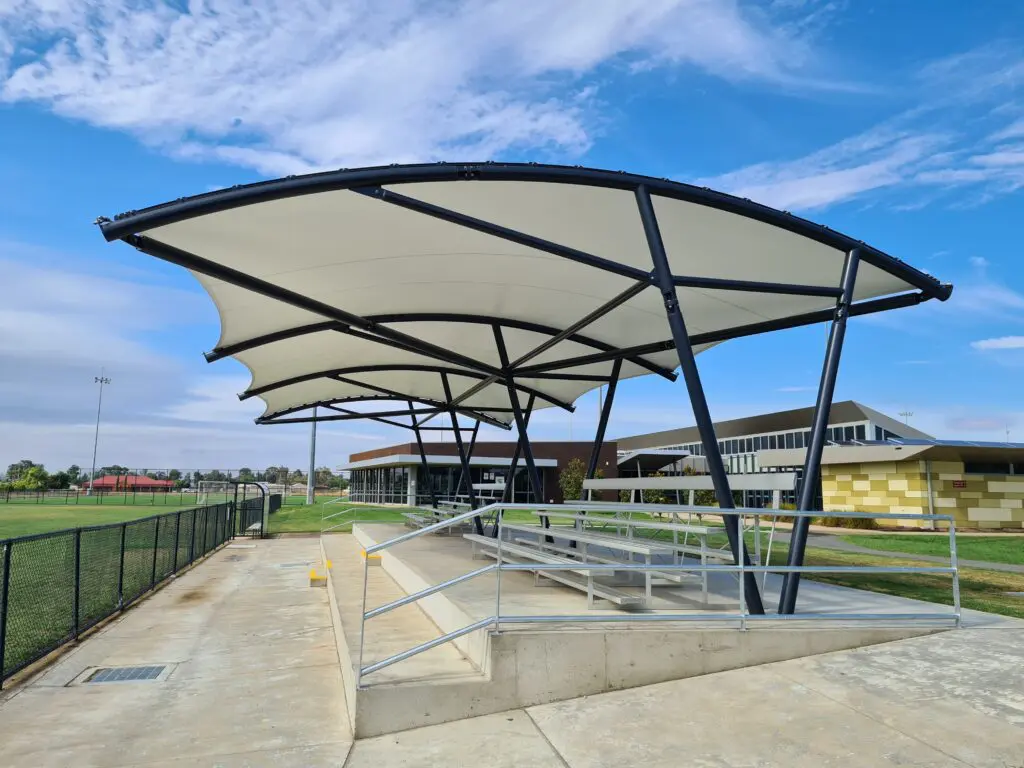
Cantilever structures are designed with their primary structural supports positioned along one side of the covered area. This means the space underneath can remain free of posts, which can be a major advantage where clear sightlines, movement or access are important.
They are commonly used for:
- walkways
- seating areas
- car parks
- sports viewing areas
- amphitheatres and outdoor performance spaces
The geometry of a cantilever also makes it particularly suited to narrower, linear spaces where coverage is required out from one edge. It is generally not the first choice for a large square area where coverage is required in multiple directions, as the structure needs to be supported from one side.
Cantilever structures can use mesh or waterproof fabric, depending on the level of weather protection required.
Barrel vault structures
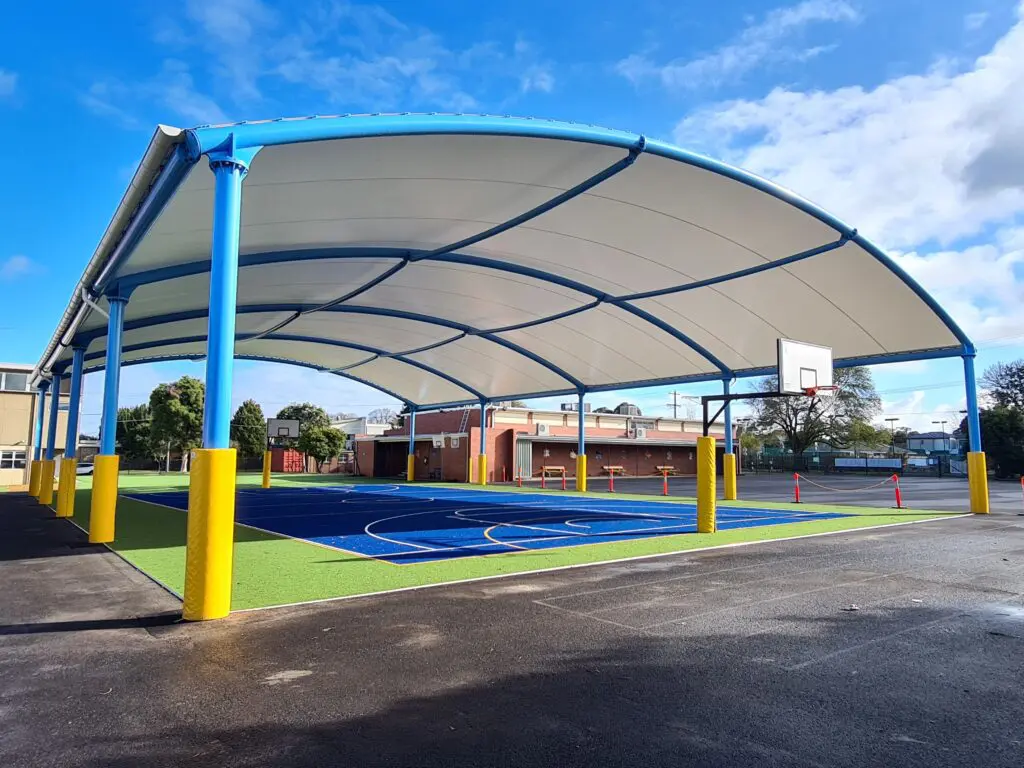
Barrel vault structures are designed to provide extensive coverage over large areas, making them particularly suited to sports and recreational facilities.
The curved roof form creates a large, covered area with clear space underneath, while the structure can be designed to suit the dimensions and requirements of the area being covered.
They are commonly used for:
- basketball and sports courts
- tennis courts
- bowling greens
- multi-purpose sporting areas
- large recreational spaces
Barrel vaults can be designed using mesh or waterproof fabric, depending on whether the priority is UV protection and airflow or protection from sun and rain.
Their curved form can also help create a high, open space underneath, which is particularly useful for sports where overhead clearance and unobstructed play are important.
Custom tension membrane structures
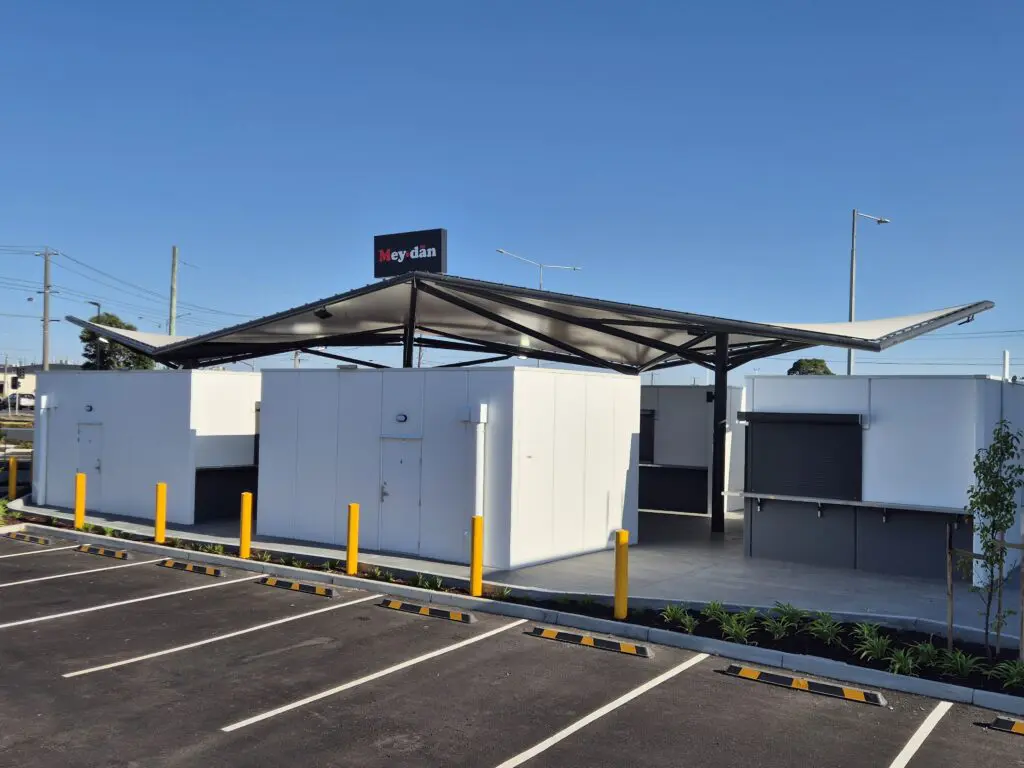
Custom tension membrane structures provide an option when a standard shade structure doesn’t quite suit the space, or when the design of the structure is an important part of the project.
Rather than selecting from a standard configuration, the structure can be designed around the size, shape, use and characteristics of the site. The fabric membrane and supporting steelwork are engineered together to create a structure suited to the specific application.
They can be used for a wide range of spaces, including:
- public spaces
- outdoor dining and entertainment areas
- community facilities
- commercial developments
- architectural features
- unusual or irregularly shaped areas
Custom tension membrane structures can incorporate different forms, shapes and supporting arrangements depending on the requirements of the project. This allows the structure to respond to existing buildings, site boundaries, access requirements and other constraints while creating a distinctive architectural feature.
The membrane can be selected to provide UV protection, airflow or waterproof weather protection, depending on how the space will be used.
This makes custom tension membrane structures particularly suited to projects with unusual site constraints, specific architectural requirements or a need for a solution that cannot be achieved using a standard structure.
Shade or waterproof protection?
Another important decision is whether the space needs shade only or protection from rain as well.
Mesh shade fabrics provide UV protection while allowing airflow and some light through the structure.
Waterproof membranes provide a higher level of weather protection, allowing an outdoor space to remain usable during rain as well as providing shade.
Mesh fabric is generally more cost-effective than waterproof fabric, making it a practical choice where rain protection isn’t required. Waterproof membranes typically involve a higher material cost but can provide greater year-round usability.
The choice comes down to how the space will be used, the level of weather protection required and the project budget. Other requirements, such as durability, fire performance, colour and appearance, may also influence the fabric selection.
Consider the site, not just the structure
The same shade structure won’t necessarily work equally well at every site. The physical characteristics of the location can influence which structure is suitable, where it can be positioned and how it needs to be engineered.
For example, a narrow area alongside a building may suit a cantilever structure, while a large open sports area may be better suited to a barrel vault. If underground services restrict where foundations can be installed, umbrellas or a structure with strategically positioned posts may provide a better solution than a conventional post-supported structure.
Sun and shade coverage
The position of the sun changes throughout the day and across the seasons, so simply placing a structure over an area doesn’t guarantee that it will provide shade when it is needed.
Shadow mapping can be used during the design process to show where shadows will fall at different times of day and throughout the year. This can help determine the size and position of the structure based on when the space is most heavily used.
Wind exposure
Wind conditions vary significantly between sites. An open sports field, coastal location and courtyard surrounded by buildings can all have different exposure.
Structures need to be engineered for the specific site, taking into account factors such as wind conditions, terrain, structure size and surrounding buildings.
Underground services and existing infrastructure
Underground services can have a major impact on where a structure can be positioned and where foundations can be installed.
This is one reason why there isn’t always a single obvious solution for a site. For example, umbrellas can be useful where foundation locations are restricted, while cantilever structures can keep supports to one side of a space. Shade sails can also be designed around existing buildings, pathways and other obstacles.
Existing features such as trees, playground equipment, buildings, drainage and access routes should be considered before the structure is designed, rather than trying to work around them later.
The shape and size of the space
The dimensions and shape of the area can also help determine the most suitable structure.
A shade sail can work well in an irregularly shaped area because its fixing points and geometry can be designed around the available space. A cantilever is often better suited to a narrow or linear area where coverage is needed out from one side. Barrel vaults and Hip & Ridge structures are more suited to larger open areas requiring extensive coverage, while umbrellas can provide targeted coverage across multiple smaller areas.
When should you involve a shade specialist?
Shade is often easier to get right when it is considered during the early design stages rather than added after the rest of the site has already been planned.
Early involvement allows the shade structure to be considered alongside landscape design, buildings, pathways, drainage, underground services, seating and equipment, access requirements, project approvals and construction sequencing.
It can also help identify when a particular structure may not be the best fit for the site and allow alternative solutions to be considered before plans are finalised.
At Shade ‘n’ Sails, we design, manufacture and install a range of shade solutions for schools, councils, commercial spaces, recreational facilities, builders, landscape professionals and residential applications.
Our capabilities include shade sails, umbrellas, Hip & Ridge structures, cantilever structures, barrel vaults and custom tension membrane structures, with design, manufacturing and steel fabrication carried out through our Ballarat facility. We are also a certified Australian Made & Owned manufacturer.
Planning a new shade project? Talk to the Shade ‘n’ Sails team about the right solution for your site.